
- Looking tired despite adequate sleep usually points to a structural change in the face.
- Eye bags, ptosis, brow descent, and volume loss each produce a distinct appearance and have different underlying causes.
- The treatment approach is determined by the underlying factors present in a patient's condition. Addressing upper lid skin when ptosis is the actual problem, for example, tends to produce an incomplete result.
- Each cause has a corresponding surgical option. A personalised assessment determines which approach, if any, is appropriate.
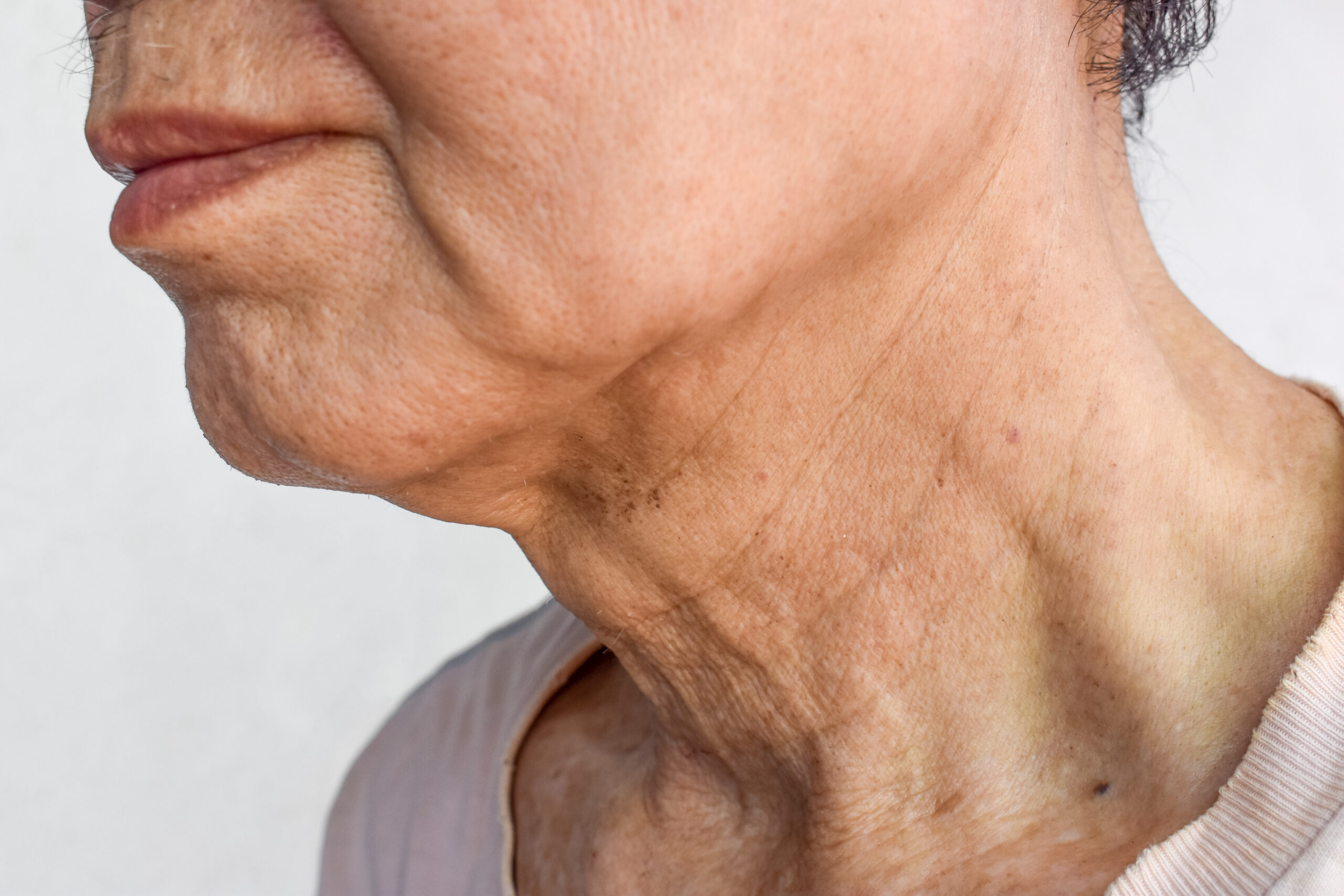
Jowls often appear earlier than expected. Long before deep lines settle elsewhere on the face, the lower face begins to lose its sharp definition, blurring the clean transition between the jaw and the neck.
The question of how to get rid of jowls is a common query we hear in consultations for the lower face. The honest answer begins with what causes them.
Sagging jowls stem from a loss of skin elasticity and collagen, along with a redistribution of facial fat as you age. While topical skincare on its own cannot permanently lift skin, you can reduce their appearance through a considered combination of clinical procedures, targeted facial exercises, and professional treatments.
What Causes Jowls to Develop
Two primary structural changes contribute to lower face laxity:
- Volume Loss and Tissue Shift: With age, deep and superficial facial fat pads gradually shrink and descend. As midface support weakens, soft tissue shifts downward, gathering along the jawline to form jowls.
- Collagen and Elastin Breakdown: Collagen and elastin give skin its firmness and resilience. As production slows over time, existing fibres weaken and fragment. The skin gradually loses its elasticity, causing static lines and sagging along the lower jaw.
Factors That Accelerate Jowl Formation
Several factors can accelerate the process or make jowls more noticeable than they would otherwise be.
- Smoking: Nicotine breaks down collagen and elastin and hampers the formation of new collagen, so skin becomes looser faster than it should.
- Sun damage: Ultraviolet radiation is one of the largest contributors to skin ageing. It weakens collagen fibres and thins the skin’s supportive layer, which is why daily protection matters more than most people expect.
- Repeated facial expressions: Habitual puckering or heavy yawning may contribute to drooping over time by stretching the skin along the same lines again and again, though this is a smaller factor than the others.
- Genetics: A family tendency toward looser skin or a heavier midface can make some people more prone to jowls at an earlier age.
- Weight changes: Dramatic weight loss can leave the skin around the jawline looking droopier because there is less underlying volume to support it.
So, Can You Get Rid of Jowls?
Yes, but the most effective approach depends on the degree of tissue laxity, structural volume loss, and skin excess.
For early-stage softening, daily sun protection and targeted skincare help slow progression. For mild-to-moderate laxity, non-surgical clinical procedures can refine the jawline. For advanced skin excess and deep structural sagging, surgical interventions yield the most comprehensive, long-term improvement.
Non-Surgical Clinical Treatments For Jowls
For mild to moderate jowls, non-surgical options can offer a subtle improvement with limited downtime.
Dermal fillers add structural support where facial fat has thinned. Hyaluronic acid fillers or collagen stimulators, placed into the midface or along the jawline, rebuild some of the support the tissue has lost and camouflage the shadowing that jowls tend to cast. Filling the jowl itself would only add bulk. The intent is to reinforce the framework around it.
Ultrasound and radiofrequency treatments approach the problem from beneath the skin. Ultherapy uses focused ultrasound energy to stimulate deep collagen production, while radiofrequency devices gently heat the underlying tissue to encourage tightening sagging jowls over a series of months. Both suit early laxity where the skin still has enough elasticity to respond, and neither is a substitute for surgery in more advanced cases.
A facial thread lift is another option. Dissolvable threads are placed under the skin along the jawline to lift the tissue subtly and to prompt a mild collagen response as they dissolve. The result is temporary and understated, and best suited to someone with early sagging who is not ready for surgery.
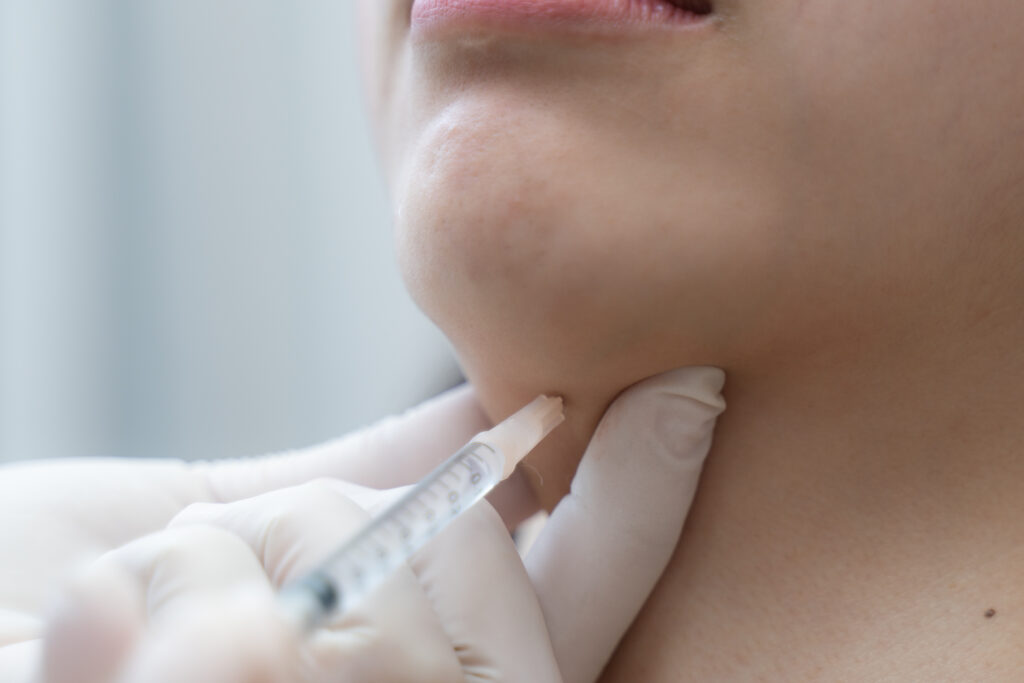
Surgical Procedures
For more pronounced jowls, particularly when significant skin redundancy and muscular sagging are present, surgery directly addresses the deeper structural layers (such as the SMAS layer) that non-surgical methods cannot reposition.
A facelift repositions the underlying tissues of the face and neck, tightens the supporting layer beneath the skin, and removes the excess skin that has gathered along the jawline. Done well, it does not change how you look so much as let your face look like itself a few years earlier, rested rather than altered.
A neck lift is often performed together with a facelift where there is significant loose skin below the chin, since the jawline and neck age as one region. Addressing them together produces a smoother contour than treating either area in isolation.
Facial liposuction has a narrower role. Where jowls are driven primarily by excess fat rather than loose skin, liposuction can sculpt the area beneath the chin and along the jaw, and refine the definition of the lower face. Whether it is the right procedure depends on how much of the concern is fat and how much is skin, which is why an individual assessment matters more than any brochure description of the technique.
Deciding how to get rid of facial jowls surgically is best made in consultation with a plastic surgery clinic that will assess your candidacy honestly and will tell you plainly if surgery is not yet warranted or if a less involved approach would serve you better.
At-Home and Lifestyle Strategies
While at-home strategies cannot get rid of heavy jowls naturally, they can slow the process, support skin quality, and help maintain the firmness you have. The honest answer is that you cannot undo established sagging without clinical help, but you can influence how quickly it advances.
Facial exercises involve simple movements such as chin tucks or slowly opening and closing the mouth against light resistance. These help engage and tone the muscles beneath the jawline, and while the visible impact is modest, they can support the underlying structure over time.
Retinoid creams, whether a prescription tretinoin or a quality over-the-counter retinol, gently encourage collagen production and cellular turnover. Used consistently over months rather than weeks, they can meaningfully support skin quality.
Daily sun protection is one of the most valuable habits for skin ageing overall. Ultraviolet rays break down collagen and elastin faster than almost any other everyday exposure, and a broad-spectrum SPF applied every morning is one of the few interventions that changes the trajectory of ageing in a measurable way.
Maintaining a stable weight also helps. Repeated weight fluctuations, particularly yo-yo dieting, stretch the skin and can worsen sagging along the jawline. A slow, sustained approach to weight change treats the skin more kindly than any rapid loss.
Restoring Jawline Definition
Jowls are a natural marker of a face changing over time, and the right approach depends on how far the change has progressed. For someone at the earliest stage, careful habits and skincare may be enough to hold the ground. For moderate laxity, non-surgical clinical treatments can offer real, if temporary, improvement. For advanced sagging, surgery is usually the only option that produces a lasting result.
Will jowls ever go away entirely without intervention? Not once they are established. Skin does not regain its youthful elasticity on its own, and structural volume does not return once it has been lost. This is why understanding the cause matters more than rushing into any single treatment, and why what serves one person well can be entirely wrong for another.
If lower facial changes are affecting your profile, schedule an in-person consultation with Dr Lee Hanjing at Argent Plastic Surgery. A personalised clinical evaluation will help identify the underlying cause of sagging and determine the safest, most effective treatment plan for your goals.