
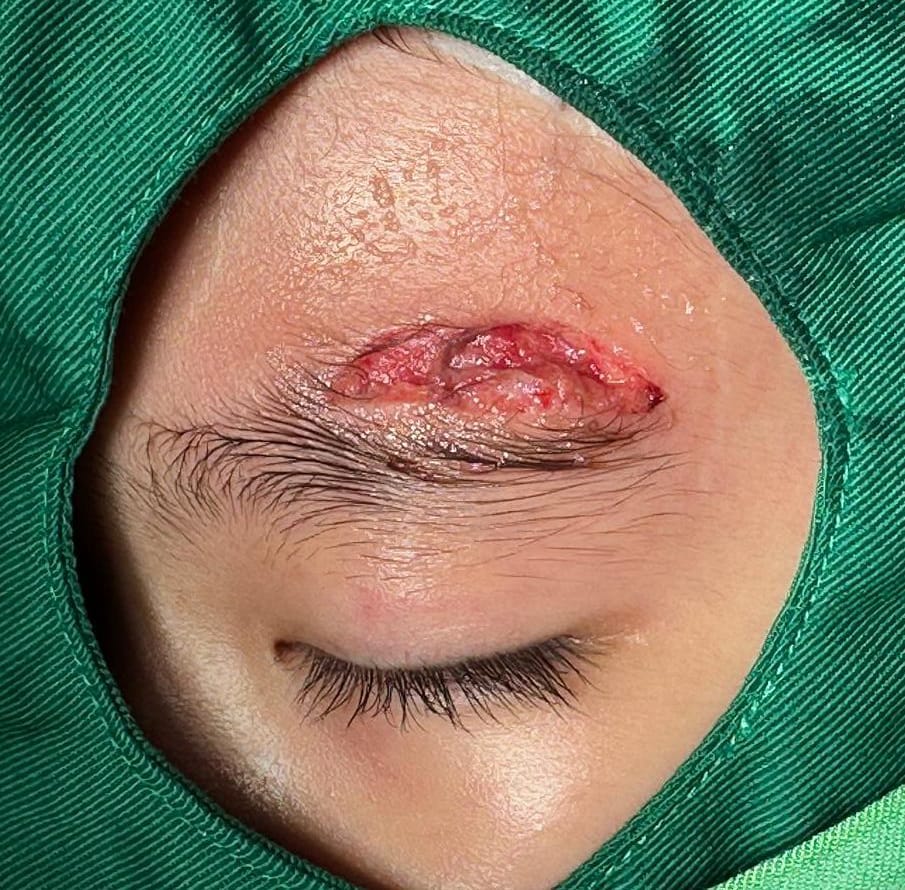
- Childhood cuts and lacerations usually heal, but deeper or poorly managed wounds may leave visible scars.
- Early care matters most, including stopping the bleeding, properly cleaning the wound, and knowing when to seek professional treatment or a plastic surgeon's input.
- Children's skin heals differently from adults, with a stronger inflammatory response that can lead to raised or hypertrophic scarring if wounds are not managed carefully.
- Post-closure care, silicone products, and sun protection all play a role in how the final scar looks.
Cuts and minor injuries are common in childhood, often occurring during play, sports, or everyday activities. While most of these heal on their own without long-term issues, some injuries, such as lacerations, may leave visible marks if not managed carefully.
Lacerations, the deeper cuts with irregular edges, need more attention than surface scrapes. How the wound is cleaned, closed, and cared for in those first few hours has a direct bearing on how your child’s skin heals and whether a scar becomes visible over time.
Why Children Scar Differently from Adults
Although the basic healing process is similar to that of adults, a child’s ongoing growth and developing inflammatory response may significantly affect how scars form and change over time.
- 0 to 6 Months: Infants under six months often heal very quickly, and scars may remain faint or barely noticeable. At this stage, the skin’s inflammatory response is still developing, which may contribute to softer and less visible scar formation.
- 6 Months to 2 Years: During this stage, scar development can vary from child to child. Some wounds may still heal with minimal scarring, while others can become more inflamed or noticeable.
- 2 Years to Teenage Years: During this period, the inflammatory response of scars becomes more dominant, and the skin’s remodelling process appears more amplified. Scarring can develop very quickly and may be more pronounced during healing. Hypertrophic scarring, in which scars become raised and thickened, is also common at this age.
The First Hours After the Injury Matter Most
The immediate window after a laceration determines how the wound heals and how the final scar may form. What happens in the immediate window after a laceration has a direct bearing on how the wound heals and how a scar may form.
What to Do
- Stop the Bleeding: Apply a clean, dry cloth directly to the wound and hold it in place with firm pressure for about 5 minutes. If the injury is on an arm or leg, keeping the limb raised above heart level can also help slow bleeding.
- Clean the Wound: Once bleeding is controlled, clean the wound with water to reduce the risk of infection.
- Cover it: Protect the wound with a clean, sterile dressing or bandage to shield it from dirt and reduce the risk of infection.
What Not to Do
- Do Not Panic: Remain calm so the child can stay reassured and still during first aid.
- Do Not Use Harsh Solutions: Avoid applying alcohol, hydrogen peroxide, or similar substances to the wound, as they can damage tissue and slow healing.
- Do Not Repeatedly Check Bleeding: Avoid lifting the cloth repeatedly, as this can disrupt clot formation and slow bleeding control.
When to See a Plastic Surgeon in Singapore
Some wounds need prompt medical attention. Seek care for your child immediately under the following conditions:
- Persistent Bleeding: Bleeding that does not stop even after 5 to 10 minutes of firm, direct pressure.
- Deep or Large Cuts: Wounds that appear deep, wide, or difficult to close.
- Near Sensitive Areas: Injuries close to important structures such as the eyes.
- Puncture Injuries: Deep, narrow wounds caused by sharp or contaminated objects like rusted metal.
- Foreign Material Inside: Cuts where dirt, gravel, or other debris is embedded in the wound.
- Irregular Wound Edges: Lacerations with uneven or jagged skin edges.
- Bite Injuries: Wounds caused by human or animal bites.
- Signs of Infection: Increasing redness, warmth, swelling, or discharge of pus from the wound.
A plastic surgeon’s approach to laceration repair in children involves prioritising tissue alignment along skin tension lines and using a layered closure technique with careful attention to minimise the eventual visibility of the scar from the outset.
How Wounds are Closed and How That Affects Scarring
How a wound is closed in the early stages can influence scar formation. The method used depends on the type and severity of the wound, and is determined by the plastic surgeon after assessing the injury.
- Sutures: Sutures (stitches) help bring wound edges together and can be placed in layers if the wound is deep. In children, absorbable sutures are preferred to avoid the need for removal. When non-absorbable sutures are used, early removal within about 5 to 7 days is important to reduce visible scars.
- Tissue Adhesive: Medical skin glue is commonly used for small, clean, low-tension facial cuts. It works by sealing wound edges quickly, reducing pain and procedure time. It is suited for short, straight lacerations and should not be used on wet or highly mobile areas.
- Adhesive Strips: Steri-Strips are thin adhesive tapes used for very superficial cuts or as additional support after other closure methods. They hold skin edges together under low tension but require dry, clean skin for proper adhesion.
Caring for the Wound at Home
Once the wound has been closed, consistent daily care supports the healing process.
- Keep the Wound Clean and Moist: Once the bandage is removed, clean the wound daily with mild soap and water to maintain hygiene. A thin layer of petroleum jelly or a recommended antibiotic ointment may be applied 1 to 3 times daily for the first few days, helping keep the wound moist and protected as it closes.
- Avoid Picking at Scabs: Discourage your child from picking at scabs or peeling wound edges. Disrupting the healing surface deepens the eventual scar.
- Protect from the Sun: Fresh scars, especially while they are still pink, are very sensitive to sunlight and can easily sunburn or darken. Avoid direct sun exposure to the healing area by wearing protective clothing, such as long sleeves, pants, or a hat.
Note: For abrasion wounds, where the surface layers of skin have been scraped away rather than cut, the same principles apply: clean gently, keep moist, and protect consistently from sun exposure.
Treatments That Help Prevent and Reduce Scarring for Children
Beyond daily wound care, several treatments may be used as part of scar management in children, depending on the type of scar and its progression.
- Silicone Gels and Sheets: Silicone gels and sheets are commonly used in scar management to support the skin as it heals. They are applied once the wound has fully closed and are typically used for several months.
- Scar Massage: Massaging with a thick moisturiser can help flatten and soften the scar. Your doctor can recommend a suitable product based on your child’s skin and the scar’s progress. Massage for 5 to 10 minutes, 2 to 3 times a day, with enough pressure to turn the scar from pink to pale.
- Steroid Injections: Steroid injections deliver medication directly into raised scar tissue and are used in the management of keloids and hypertrophic scars. Suitability and frequency are determined by the treating doctor.
- Laser Treatment: Laser treatment uses a focused beam of light to address scar texture and colouration by targeting the outer layers of skin. It is one option to consider, depending on the type of scar and the child’s age.
- Pressure Therapy: it involves wearing custom-made garments that apply controlled pressure to the scarred area over an extended period. It is commonly used for larger or burn-related scars.
When to Follow Up With a Plastic Surgeon
Scar tissue continues to mature and change after an injury. Scheduling follow-up appointments at the time of suture removal and again a few weeks later allows early detection and management if the scar is not healing as expected.
An earlier review is recommended if:
- The scar becomes raised, red, or persistently itchy
- It starts to widen instead of gradually fading
- Pigmentation darkens despite consistent sun protection
If a scar does not heal as expected, an early conversation with your plastic surgeon will help clarify what approaches may be appropriate for your child’s specific situation.
Paediatric Laceration and Scar Care: Looking After Your Child at Argent Plastic Surgery, Singapore

For facial lacerations and other visible cuts in children, early involvement of a plastic surgeon means the wound is assessed and managed with scar formation in mind from the beginning.
At Argent Plastic Surgery, Dr Lee Hanjing assesses the injury, explains the approach she recommends, and discusses what the healing process typically involves based on your child’s specific wound.
In addition to paediatric laceration care, she also provides paediatric burn treatments, ensuring care for a range of childhood injuries.
To arrange an assessment of your child’s injury with Dr Lee Hanjing, book a consultation at Argent Plastic Surgery today.