

- Looking tired despite adequate sleep usually points to a structural change in the face.
- Eye bags, ptosis, brow descent, and volume loss each produce a distinct appearance and have different underlying causes.
- The treatment approach is determined by the underlying factors present in a patient's condition. Addressing upper lid skin when ptosis is the actual problem, for example, tends to produce an incomplete result.
- Each cause has a corresponding surgical option. A personalised assessment determines which approach, if any, is appropriate.
Not every back pain responds to the standard ergonomic advice, posture correction, workstation set-up or a mattress upgrade. In women, one of the more common contributing factors is anatomical and well-documented, and often missed because it can feel difficult to raise in a clinical setting.
Because discussing breast volume in relation to physical health can feel personal, this factor is frequently overlooked or under-addressed in routine medical evaluations.
Large breasts place a steady forward load on the upper body, and back pain from breasts of significant size and weight is a legitimate physical complaint. While large breasts do not cause back pain in every woman with a fuller chest, in a considerable number, the link between large breasts and back pain is real, measurable and treatable. Our post will explain what is actually happening, how to tell whether your own pain may be breast-related, what to try first, and when a longer-term option is worth considering.
What the Research Says About Breast Size and Back Pain
The link between breast size and musculoskeletal symptoms has been studied for well over a decade. Higher breast volume correlates directly with increased back pain, jumping from around 5% in smaller cup sizes to over 80% for DD cups and above1. Assessing breast size is critical when treating spinal strain, reinforcing that reduction surgery is often a medical necessity rather than a cosmetic choice.
Why Large Breasts Put Strain on Your Back
Heavy breast tissue pulls the upper body forward and shifts the body’s centre of gravity away from where the spine sits comfortably. To keep you upright, the muscles of the upper back, neck and shoulders have to work overtime, holding the body against a load that never lets up. Over months and years, these muscles fatigue and tighten, particularly across the trapezius and rhomboids in the mid-back.
When that compensation becomes long-term, posture itself begins to shift. Shoulders round forward, the upper spine can develop a more pronounced curve (thoracic kyphosis), and in some cases the altered alignment starts to press on spinal discs and nerves. Large breasts and back pain are linked most obviously in the upper body, but the lower back is often affected as well. As the upper spine collapses forward, the lumbar spine compensates by moving in the opposite direction, which is why many women with macromastia also report persistent lower back symptoms.
An ill-fitting bra makes all of this worse. When a bra doesn’t support the chest properly, the weight ends up hanging from the shoulder straps rather than sitting across the chest wall, and that is where those deep, painful grooves at the end of the day come from. The bra itself isn’t the underlying cause, though. The weight is still there when the bra comes off. A better bra just changes how your body carries it.
How to Know if Your Back Pain is Coming From Your Breasts
Distinguishing breast-related back pain from other causes can feel difficult, because the symptoms overlap with the more familiar postural and muscular complaints. What kind of back pain can large breasts cause, then, and how does it typically show up?
The pattern that tends to point to breast weight as a factor usually shows up as a combination of the following:
- Pain that sits mainly in the upper back, neck and shoulders
- Deep or painful bra strap grooves by the end of the day
- Pain that worsens with physical activity or prolonged standing
- Relief when lying flat on your back, because the forward pull is temporarily lifted from the spine
- Noticeable improvement in a more supportive bra or a well-fitted sports bra, which is a useful informal test in itself
The definitive answer, however, comes from a clinical assessment. A surgeon or physician can assess the relationship among your breast volume, body frame and specific symptoms and rule out other possible causes at the same time.
Ways to Relieve Back Pain from Large Breasts
For many women, conservative measures give meaningful relief and are the sensible first step. For some, they will be enough on their own. For others, they manage the symptoms without addressing the underlying cause. How well these approaches relieve back pain from large breasts depends on how much of the load can be shifted, and how well the muscles supporting your spine respond to strengthening.
Get a Professional Bra Fitting
Wearing a properly sized bra with a wide supportive band, structured side panels, and cushioned shoulder straps ensures weight is distributed across the thoracic ribcage rather than hanging entirely from the shoulders.
Work with a Physiotherapist
Working with a physiotherapist focuses on strengthening the upper back, core, and deep spinal stabilisers. Key exercises aim to strengthen the mid-trapezius and rhomboids while stretching tight pectoral muscles to counteract forward shoulder rounding.
Adjust Your Posture and Workspace
Optimising desk height, computer monitor levels, and supportive seating reduces cumulative slouching for those who sit for long hours.
Symptomatic Relief
Warm compresses, gentle massage, and short-term anti-inflammatory medications can help manage acute muscle spasms during flare-ups.
These strategies are worth pursuing. For women with breasts that are substantially disproportionate to their frame, however, the physical load is often too great for conservative measures to fully resolve, and the relief tends to be incomplete or short-lived.
When Breast Reduction Surgery is Worth Considering
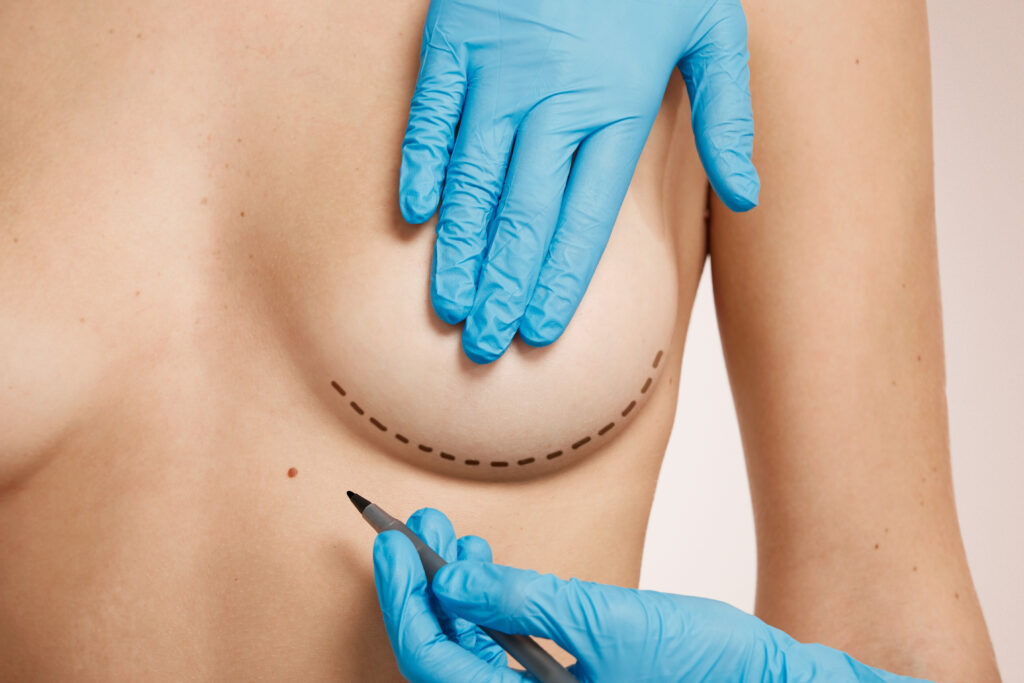
Breast reduction surgery, known clinically as reduction mammoplasty, is not a purely cosmetic procedure. In women with macromastia, it addresses a documented physical burden, and relief from musculoskeletal symptoms is one of the most consistently reported outcomes in the literature.
Reduction mammoplasty removes excess glandular tissue, fat, and skin to reconstruct a smaller, lighter breast mound that is anatomically proportionate to the patient’s body frame. In women who have also experienced volume loss or laxity of the skin, a lift component (mastopexy) may be incorporated.
Not everyone with large breasts is a candidate, and not everyone who is a candidate is ready to proceed. The women who tend to benefit most are those whose symptoms have persisted despite physiotherapy and a proper bra fitting, whose breast volume is genuinely disproportionate to their frame, and who understand that the goal is lasting physical relief alongside a natural, proportionate result. Any decision to explore surgery should begin with a consultation where the surgeon assesses your anatomy, symptoms and overall health, rather than a predetermined outcome.
At Argent Plastic Surgery, Dr Lee Hanjing provides breast reduction and mastopexy consultations that can assess whether your back pain is likely to be breast-related, what non-surgical measures may help, and whether reduction surgery is a suitable option for your anatomy and circumstances.
Moving on From Pain
Chronic back pain resulting from significant breast weight is a recognised physical condition. This is a real health concern, not a cosmetic one dressed up as one, and the discomfort many women have carried quietly for years deserves a proper assessment rather than continued self-management alone.
Non-surgical options are worth trying first, and for many women they offer genuine relief. Where they fall short, breast reduction surgery has a strong evidence base for lasting relief and can be seen as a measured next step, not a last resort.
At Argent Plastic Surgery in Singapore, Dr Lee Hanjing provides clinical evaluations for patients experiencing physical discomfort from macromastia. A consultation involves an assessment of your anatomical proportions, discussion of conservative care pathways, and an objective review of whether reduction mammoplasty or a combined mastopexy approach is appropriate for your long-term health.